The Otero-Bergere House. Photo: Nina Zacuto
Santa Fe — Where the Suffrage Movement Spoke in Two Languages, and the ERA Speaks for All
Santa Fe, New Mexico, stands as one of the most powerful links between the original fight for women's suffrage and today's movement for the Equal Rights Amendment. More than a century ago, this city was a hub of organizing in the Southwest — where Hispanic, Anglo, and Indigenous women came together to demand a voice in democracy. In 1915, suffragists marched through the streets of Santa Fe in one of the region's earliest public demonstrations for voting rights, delivering speeches in both English and Spanish and modeling a movement built on inclusion. They marched to the home of anti-suffrage Senator Thomas Catron to demand support for a federal voting rights amendment.
At the center of that effort was Adelina "Nina" Otero-Warren, a Santa Fe leader who insisted the campaign reflect the people it sought to represent. Her bilingual strategy helped mobilize communities across New Mexico and contributed to the state's ratification of the 19th Amendment in 1920. This was a perfect place to stop and pay our respects as people signed the national ERA petition.
New Mexico: a national leader in women's political power — with a female majority in the legislature and a long tradition of women serving in top leadership roles, including as governor, and two women in the U.S. House of Representatives.
The Otero-Bergere House: A National Landmark for Women's Rights
Our first stop of the day was a visit to the Otero-Bergere House, one of two New Mexico sites on the National Votes for Women Trail. She lived in, managed, and eventually owned the house — a transformative leader and suffragist who bridged cultural and linguistic divides to secure women's rights and preserve the heritage of New Mexico. As a descendant of two of the state's most influential Hispanic families, she utilized her social and political standing to ensure that the suffrage movement was inclusive of Spanish-speaking women. In 1917, Alice Paul called on her to lead the New Mexico chapter of the Congressional Union, later to become the National Women's Party.
Canyon Road: Where Independent Women Built a Movement
The Saxon continued to Canyon Road, a premier art district with a history deeply rooted in social activism and cultural preservation. In the early 20th century, Canyon Road became a destination for independent women who sought lives outside of traditional domestic roles. Many women moved to the district to establish their own studios and achieve financial independence as artists. There, women formed a close-knit community that fostered discussions and organizing on suffrage, civil rights, and cultural preservation, challenging the male-dominated social structures of the time. Pilar Law, curator of Edition One Gallery, reserved a prime location in front of her gallery for the Golden Flyer II. The beautiful weather, the complimentary croissants Pilar set out, and the gleaming Saxon drew many passersby who stopped to ask questions, learned about the Driving the Vote for Equality Tour, and added their name to the Sign4ERA petition.
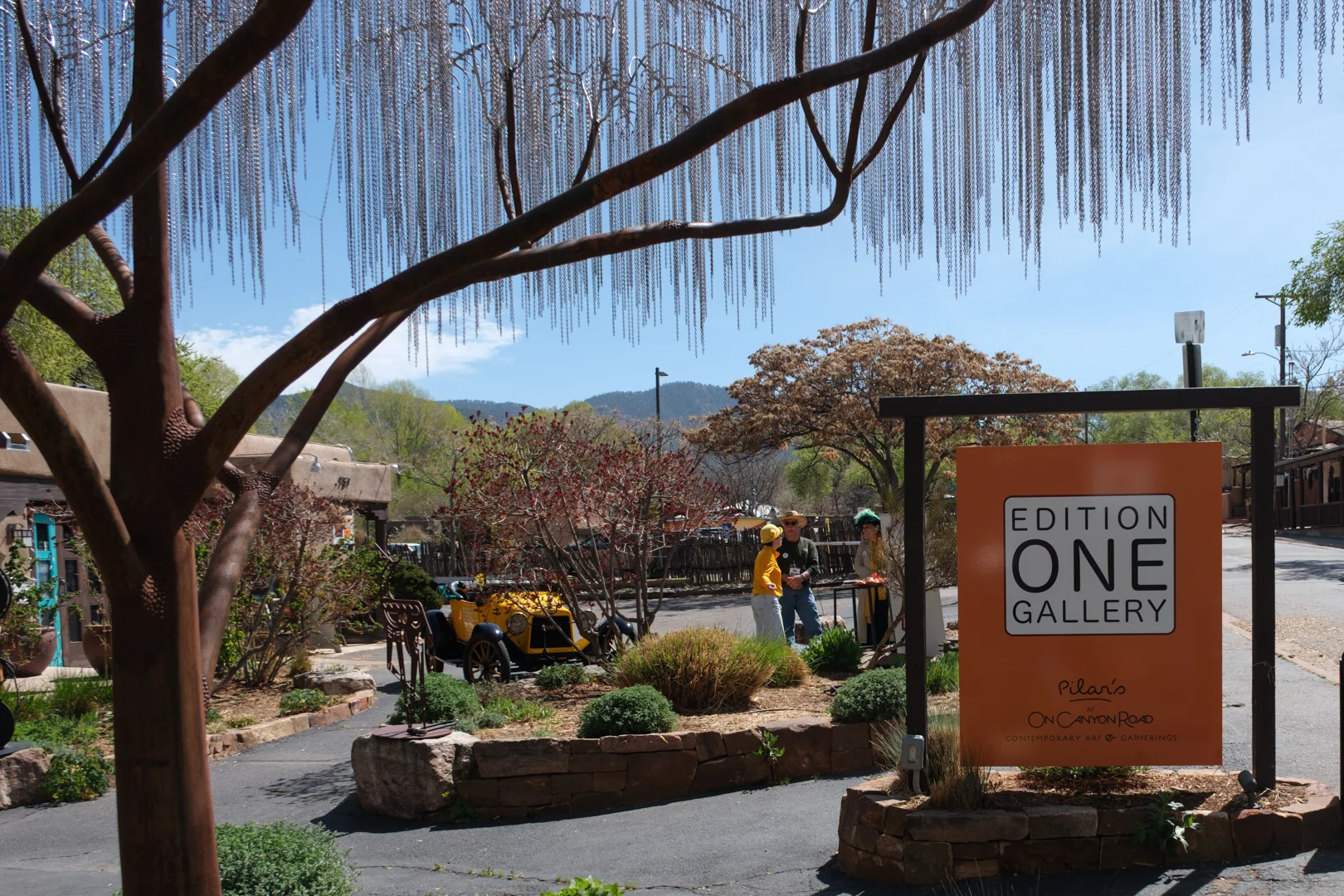
Among the visitors was Pilar’s mother Lisa Law, and American photographer and filmmaker who was happy to sign the petition and wish the tour well. Photo: Nina Zacuto
Santa Fe Plaza: The Heart of the Suffrage Movement Then and Now
Later in the afternoon, the Golden Flyer II attracted attention at the Santa Fe Plaza, the primary stage for the women's suffrage movement in New Mexico. The plaza served as both a symbolic and functional center for activism. Suffragists launched major marches from the Plaza, which were designed to navigate the political geography of the capital by passing the federal building and circling the state capitol. Just off the Plaza, the Palace of the Governors served as a headquarters for the Santa Fe branch of the Congressional Union for Woman Suffrage. Suffragists used the Plaza to directly confront or lobby officials. For example, in 1915, 150 women marched to the home of anti-suffrage Senator Thomas Catron to demand support for a federal amendment. On this afternoon, crowds of tourists and local residents strolling through the Plaza gathered to admire the Golden Flyer II, learned about ties between the suffrage movement of the early 20th century and the drive for equal rights for women and men today.
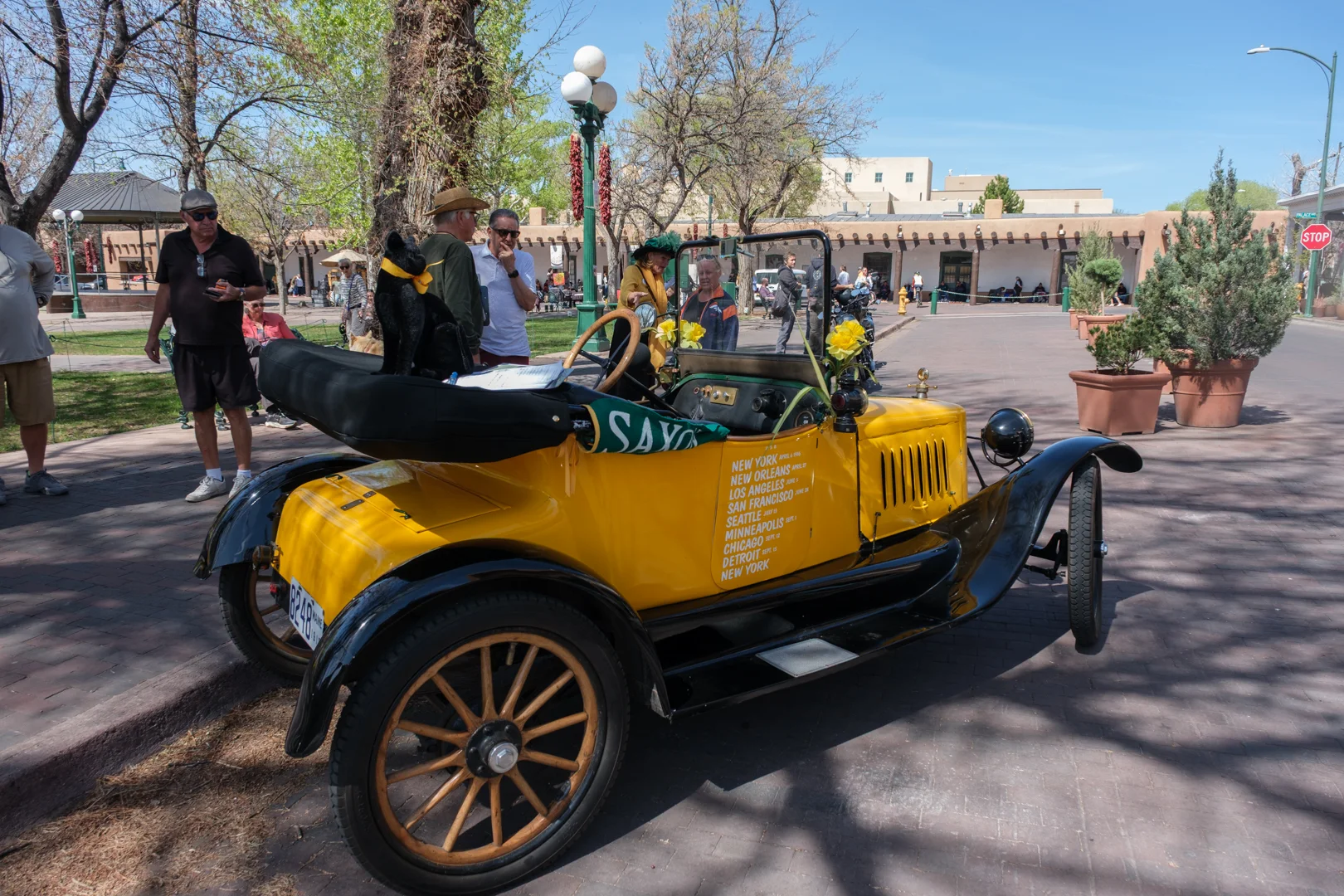
Golden Flyer II on the famed Santa Fe Plaza attracting those who want to learn more about the Equal Rights Amendment and the goals of ERA-NOW. Photo: Nina Zacuto
Today, the state stands as a national leader in women's political power — with a legislature that has reached a female majority and a long tradition of women serving in top leadership roles, including as governor, and two women in the U.S. House of Representatives in a state with three members.
The Honorable Teresa Leger Fernández represents the people of Santa Fe, and she is the Chair of the Democratic Women's Caucus in the U.S. House of Representatives. Along with other Joint Resolution co-sponsors, Congresswoman Fernández received a special ERA Champions Award presented by Zakiya Thomas, Executive Director of the national ERA Coalition, at a Driving the Vote for Equality event in Washington, DC. The Women's Caucus will be an important vehicle for the success of the adoption of an ERA Joint Resolution, hopefully in the next Congressional session. Santa Fe, as the capital, remains the heart of that progress for women and men — where advocacy, policymaking, and civic engagement continue to shape the future, and is served well by Congresswoman Fernández and her leadership in Congress.
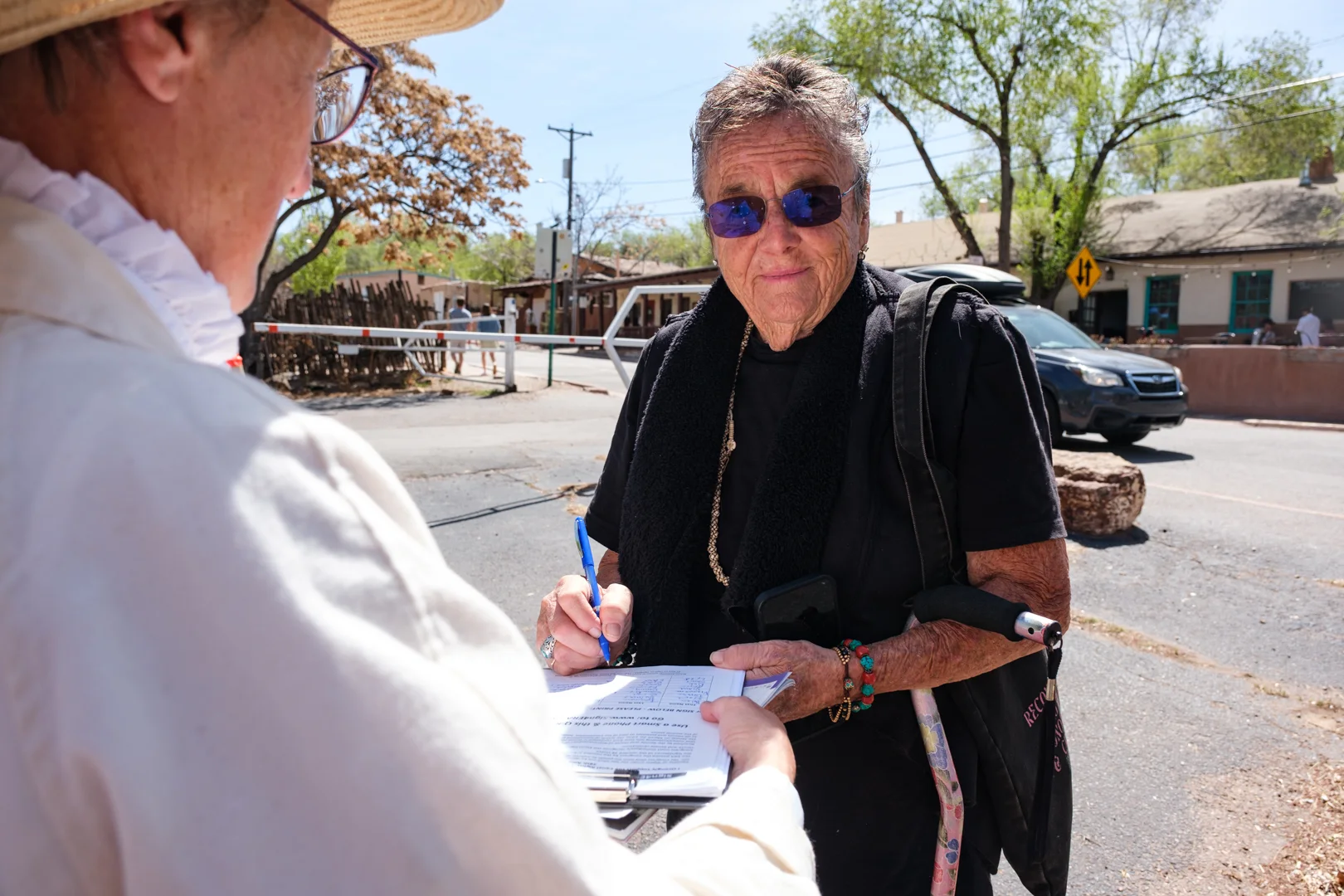
On a bright sunny day in Santa Fe tourists and residents early add their names to the Sign4era.org Petitions. Photo: Nina Zacuto
As the Golden Flyer II takes a short break until April 30 in Arizona, it carries forward the spirit of those early suffragists. In Santa Fe and across the 12 states we have visited, the message is clear: the fight for equality has always been bold, inclusive, and unfinished.
Follow the Journey
Watch history happen. The Golden Flyer II is rolling — New York to the Pacific and back. Track every stop as we drive the ERA fight across 25 states. Real stops. Real people. Real pressure.

