Alice and Nell arrive at the Old State Capitol, Baton Rouge. Photo: Alex Huppé
Baton Rouge & Lafayette — Taking the ERA to the Streets, One Signature at a Time
When Alice Burke and Nell Richardson arrived in Baton Rouge on the evening of April 28, 1916, they had just survived a broken leaf spring in the middle of a stream. Undeterred, they parked the Golden Flyer by the curb in front of the Istrouma Hotel, stood up on the car's seat, and delivered suffrage speeches to a large, engaged crowd — moviegoers who had been tipped off by an announcement flashed on local theater screens just before the meeting. When one man in the audience threatened to become boisterous, the police intervened and removed him so the women could finish in peace.
One hundred and ten years later, the Golden Flyer II came to Louisiana with the same spirit and a similar strategy: take the message to the streets and talk to regular people — not just the core of ERA activist groups.
Day 1 — Baton Rouge: The Old State Capitol and the Mississippi River
Traveling from Baton Rouge to Lafayette, the Driving the Vote for Equality Tour brought the legacy of the suffrage movement into direct conversation with today's fight for constitutional equality.
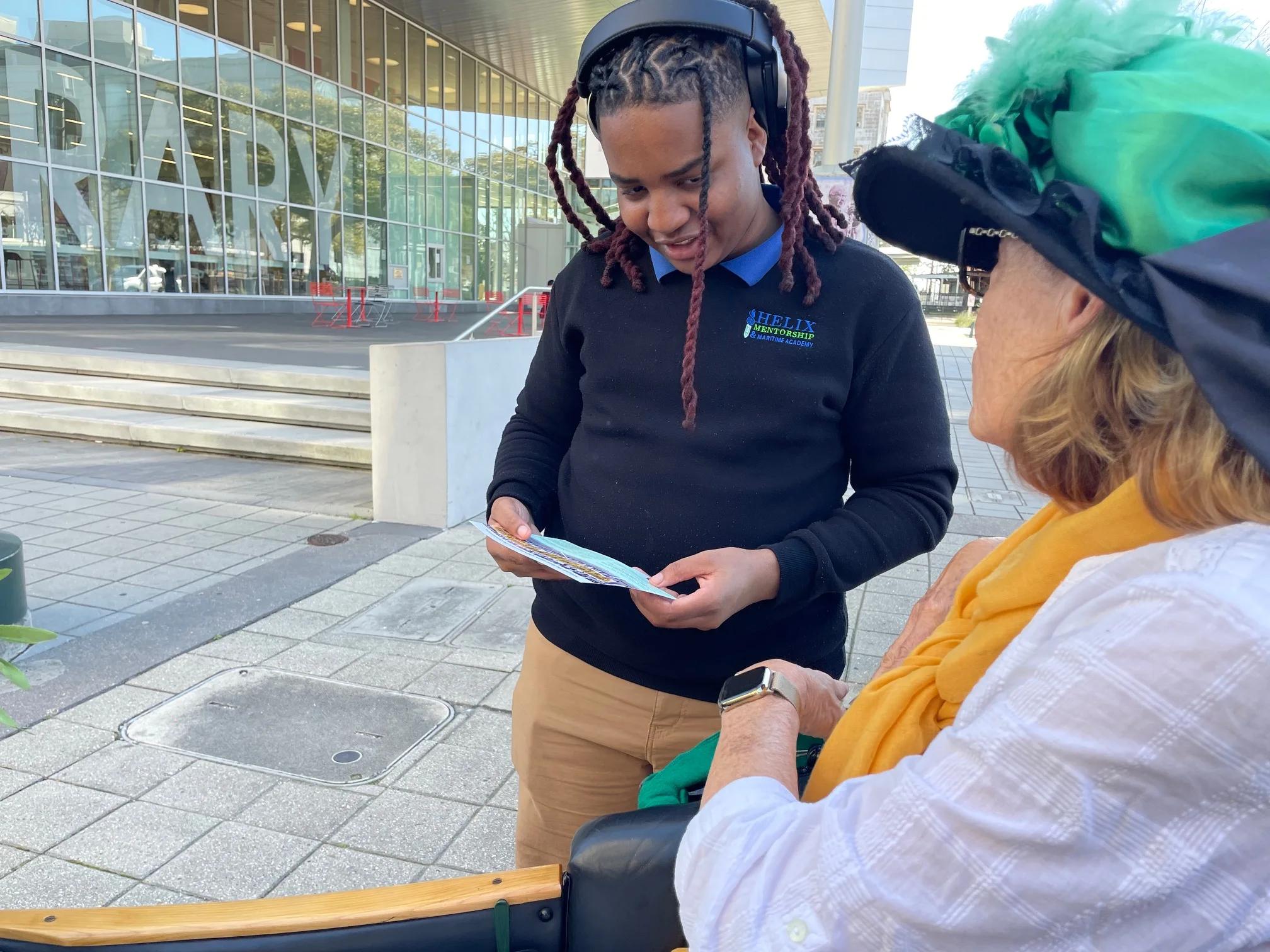
Jeryl Schriever, collects one more petitio signature outside the East Baton Rouge Public Library — weeks into the tour, the Alice and Nell story lands with the easy authority of someone who has lived inside it, and the petitions keep filling up. Photo: Alex Huppé
In Baton Rouge, the team gathered signatures at the Old State Capitol — home to Louisiana's first marker on the National Votes for Women Trail, unveiled in 2021. The site honors the diverse individuals and events that helped secure the Nineteenth Amendment in 1920, making it a powerful setting for the Golden Flyer II and the ongoing push to affirm the Equal Rights Amendment. As expected, people were enthusiastic and supportive. Jeryl also gathered signatures at the East Baton Rouge Public Library, working the crowd with the easy authority of someone who has been telling the Alice and Nell story for weeks now.
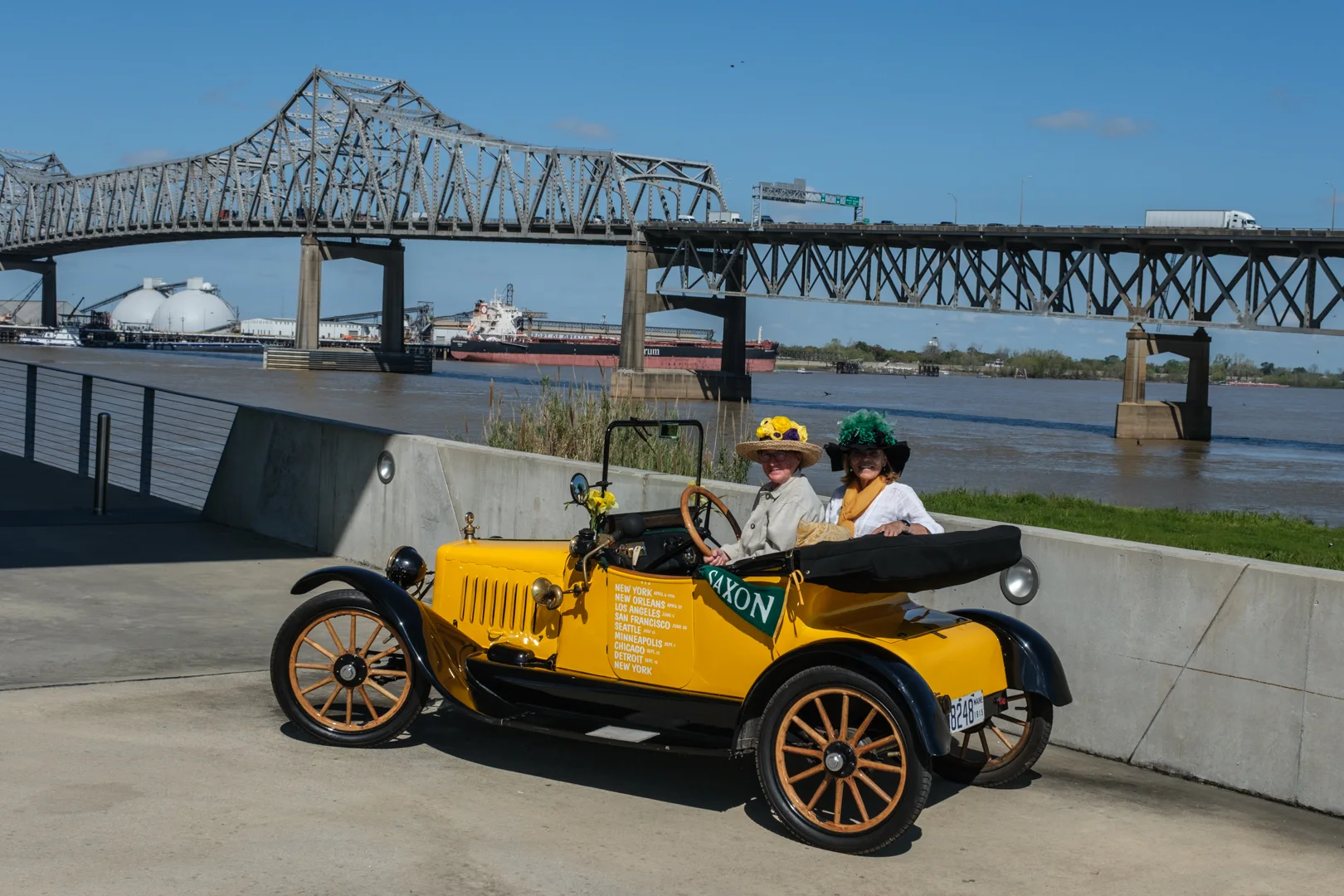
Jeryl Schriever and Susan Nourse — Alice and Nell — on the banks of the Mississippi River in Baton Rouge, with the I-10 New Bridge in the background. Two women on a constitutional mission, standing where the river that has witnessed a century of the battle for the ERA keeps rolling south. Photo: Nina Zacuto
A stop along the Mississippi River produced one of the day's quieter but more resonant moments. Two men — both veterans, one Marine Corps, one Air Force — were staging for a local event when the Golden Flyer II rolled up. After learning about the ERA and the Joint Resolution before Congress, both took a short break, asked questions, and signed the petition before returning to their work. The ERA is for all people, women and men. They got it.
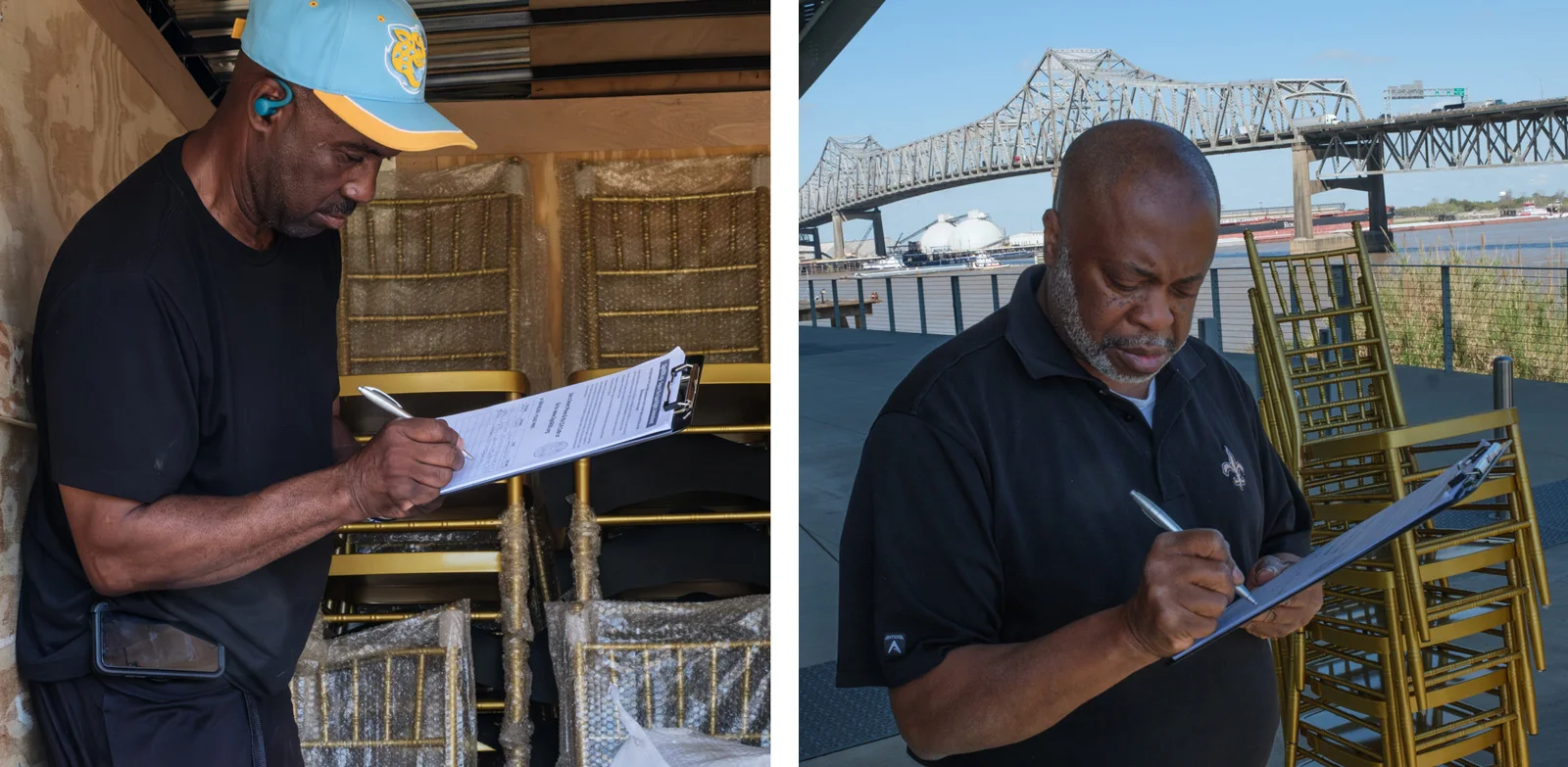
Two retired veterans — one Marine Corps, one Air Force — take a break from a local event to sign the Sign4ERA.org petition in Baton Rouge. The ERA is for all people, women and men. They got it. Photo: Nina Zacuto
Marc Tucker, our on-the- road reporter, got something too — his first driving lesson in the Saxon, courtesy of Susan, in a parking lot near the Mississippi River overlook. He left, by all accounts, a convert to the pleasures of driving a century-old roadster on a constitutional mission.
Day 2 — Lafayette: Honking Cars, a Publisher, and a Man Who Said "I'm Sorry"
In Lafayette, the team set up on a busy corner near the local post office. Passing cars honked in support. Pedestrians stopped to listen, ask questions, and sign. Many were surprised to learn that gender equality is still not explicitly guaranteed in the Constitution.
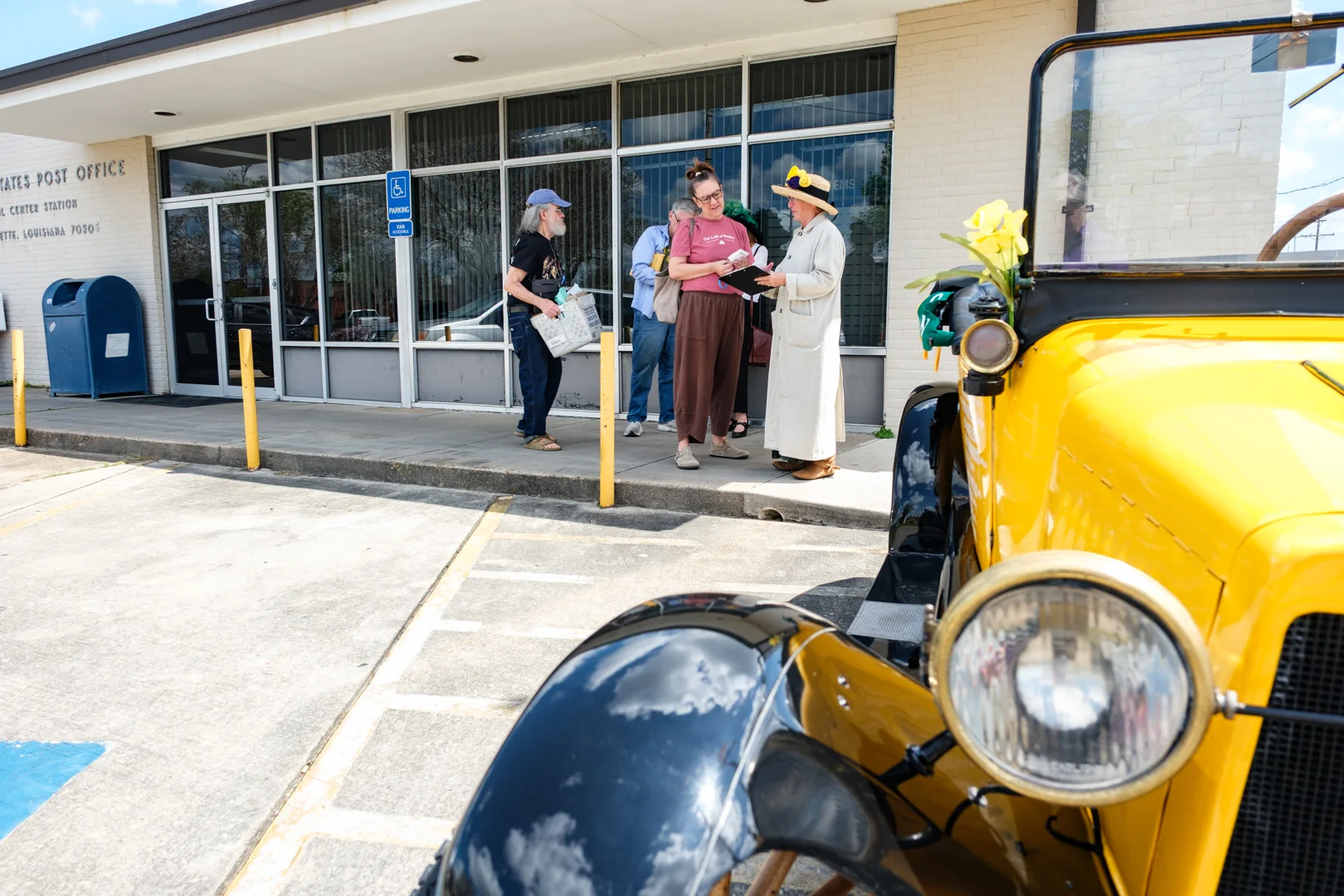
Susan Nourse works the corner outside the Lafayette Post Office — explaining the Congressional Joint Resolution and the Sign4ERA.org petition to passersby while cars honk support from the street. One conversation at a time, one signature at a time. Photo: Nina Zacuto
One man paused and said: "I'm sorry we don't have equality yet."
That's the reaction this tour has been producing at every stop — not just among committed activists, but among people who simply didn't know. The Golden Flyer II is a conversation starter. The conversation leads to the petition. The petition leads to Congress.
Local voices added momentum. Acadiana Publisher Trenton Angers shared the effort with his networks. Megan Christie — who had previously worked on ERA ratification — signed on as a grassroots organizer, eager to reengage others.
Why Signing the ERA Petition Still Matters — And Always Has
At panel discussions, bookstore talks, and organizing meetings throughout the Driving the Vote for Equality Tour, a question occasionally surfaces: Why does signing the national Equal Rights Amendment petition — Sign4ERA.org — matter?
It's a fair question. Americans have marched, rallied, and advocated for the ERA for more than a century. What difference does one more signature make in 2026?
The answer is both simple and powerful: petitioning is not a new tactic. It is a proven strategy — one used from the founding of the country through the original suffrage movement to secure constitutional change.
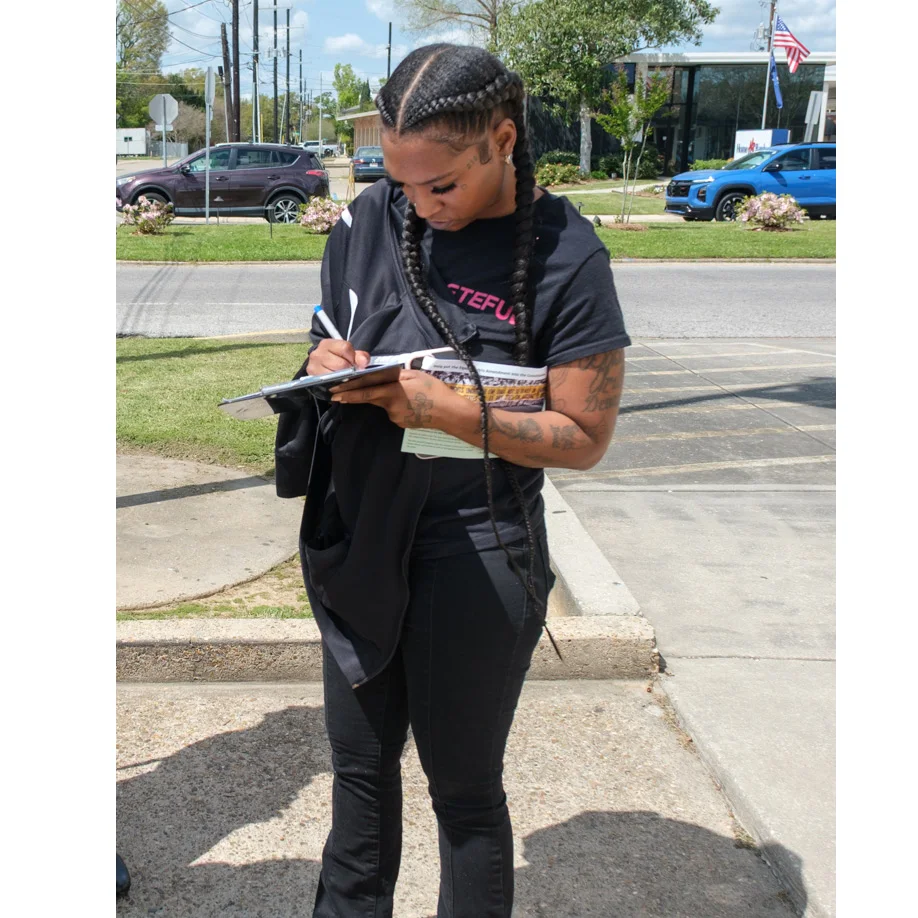
Signing the Sign4ERA.org petition outside the Lafayette Post Office — a tradition as old as the nation itself. From the First Congress to Seneca Falls to today, petitioning has never been symbolic. It has always been strategic. Photo: Nina Zacuto
Sign4ERA.org began in 2023 at Roosevelt House at Hunter College, where former Representative Carolyn Maloney worked with students to identify one action that was both simple, accessible and meaningful. Senate Majority Leader Chuck Schumer became the first to sign, followed by leaders across the feminist movement. The platform is modern. The strategy has deep historical roots backed by today's scientific evidence.
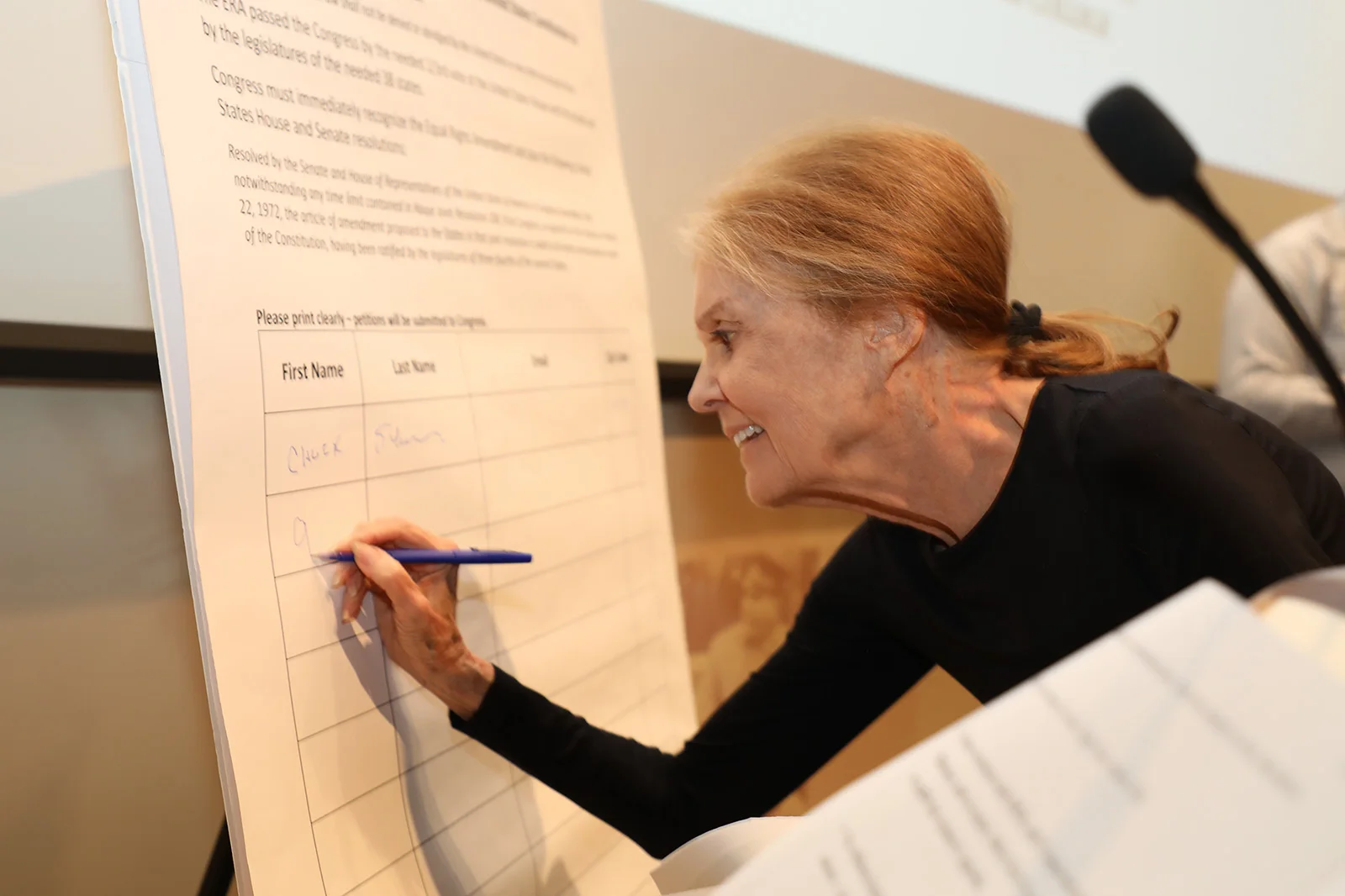
Gloria Steinem among the leaders who signed the Sign4ERA.org petition on kickoff day at Roosevelt House at Hunter College in 2023 — where Senate Minority Leader Chuck Schumer, former Representative Carolyn Maloney and students launched the campaign that will grow to one million signatures by Election Day 2026.
The right to petition the government is enshrined in the First Amendment. From the earliest days of the Republic, Americans used petitions to speak directly to Congress. The First Congress received hundreds — on veterans' pay, taxation, and slavery. Petitioning was not symbolic; it was how people forced their governmental leaders to confront issues they preferred to avoid.
Petitioning is not symbolic.
It’s a collective demand for equality.
That same strategy carried forward into the women's voting rights movement. At the Seneca Falls Convention in 1848, Elizabeth Cady Stanton and others issued the Declaration of Sentiments — a bold, collective demand for equality. For decades, suffragists gathered signatures across the country, using petitions as a deliberate strategy to demonstrate a mandate for change.
By the 1910s, that strategy reached a decisive moment. In New York, suffrage organizers gathered more than one million signatures ahead of the 1917 state referendum. That effort made it impossible for elected officials to claim indifference. New York's victory shifted the national calculus and helped propel the 19th Amendment toward passage. The petition was not the victory — it was the strategy that made the victory possible.
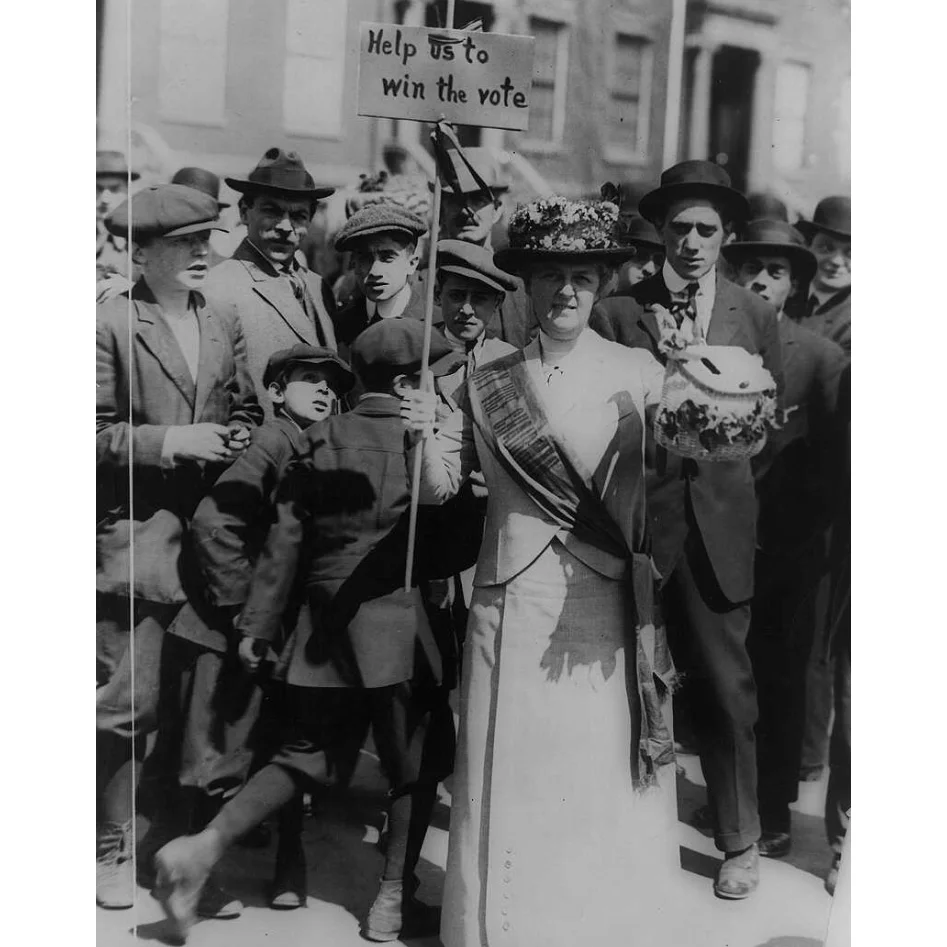
For decades, suffragists gathered signatures across the country, using petitions as a deliberate strategy to demonstrate a mandate for change. In 2026, the strategy is the same. The amendment is different. The finish line is in sight. Photo: Bain Collection
Today, Sign4ERA applies that same strategy.
More than 80 percent of Americans support the ERA. But polling alone does not move Congress — constituents do. A petition signature does three things: it identifies a voter by district, creates measurable accountability, and transforms passive support into active demand.
At scale — hundreds of thousands, ultimately millions of signatures across all 435 Congressional districts — that demand becomes visible, organized, and impossible to ignore.
And the ask is precise. Congress is not being asked to start over. It is being asked to affirm the Equal Rights Amendment — already ratified by 38 states — and ensure that equality of rights under the law is fully recognized in the Constitution.
From the First Congress to Seneca Falls, from the million-signature campaigns of the suffrage movement to today, petitioning has never been symbolic. It has always been strategic.
Modern political science research confirms it. A 2014 study published in the American Political Science Review found that petitioning empowered those engaged to become active leaders and organizers not only at present, but decades into the future — ultimately building communities of activists, with the petition itself becoming a genesis for dialogues, contacts, and collaboration.
A petition transforms passive support into active demand.
The Sign4ERA.org campaign is designed around this research. Every signature is a constituent, not a count. Our goal of 300,000 signatures by the end of the Tour in June and one million by Election Day is not chosen arbitrarily — it is chosen because at that scale, distributed across 435 Congressional districts, every single competitive district in America has a visible, named, organized constituency demanding a Congressional vote on the ERA.
This is how change has always happened in America — one voice, joined by another, until it becomes impossible to ignore. Add your name. Ask others to do the same. Be counted. Help make equality the law of the land.
Follow the Journey
Watch history happen. The Golden Flyer II is rolling — New York to the Pacific and back. Track every stop as we drive the ERA fight across 25 states. Real stops. Real people. Real pressure.

