Alice and Nell roll into Asheville. Photo: Nina Zacuto
Asheville — Where the Mountains Always Win, and So Does the ERA
There are cities that survive. And then there are cities that come back swinging. Asheville, North Carolina is the second kind.
The Golden Flyer II rolled into the "Paris of the South" on a morning chilly with mountain air — and into a city that has been through the flood, literally and figuratively, and is still standing. Still building. Still, as it turns out, fighting for the Equal Rights Amendment.
Asheville Then and Now: The Mountain Always Wins
In 1916, when Alice Burke and Nell Richardson drove their Golden Flyer through North Carolina, Asheville was at the height of its Gilded Age glory — the playground of the American aristocracy, anchored by George Vanderbilt's Biltmore Estate. French Renaissance architecture. Frederick Law Olmsted's manicured landscapes. Women in corsets navigating the rigid social hierarchies of pre-war Southern high society, while just outside the Biltmore gates, the village workers lived in a carefully curated "proper" environment designed by the same millionaires who owned everything else.
In 1916, the flood was a tragic interruption of an aristocratic dream. In 2026, the flood is a climate-driven call to action.
The wealthy of Asheville rode in Chalmers motor cars — substantial, mid-priced machines that suited their station. But even as the Vanderbilts and their neighbors were settling into their châteaus, a different kind of car was being born out of the same Detroit ecosystem. Saxon Motor Company grew directly out of the Chalmers circle — engineers, suppliers, design practices, all flowing from one company into a new one with a deliberately different mission. Where Chalmers served the comfortable, Saxon was built for everyone else: lightweight, affordable, engineered for simplicity, and marketed specifically to new drivers — including women. The pitch was straightforward: why buy a used, worn-out big car when you can buy a new light car for the same money? Alice and Nell chose a Saxon, donated by the manufacturer. They chose well.
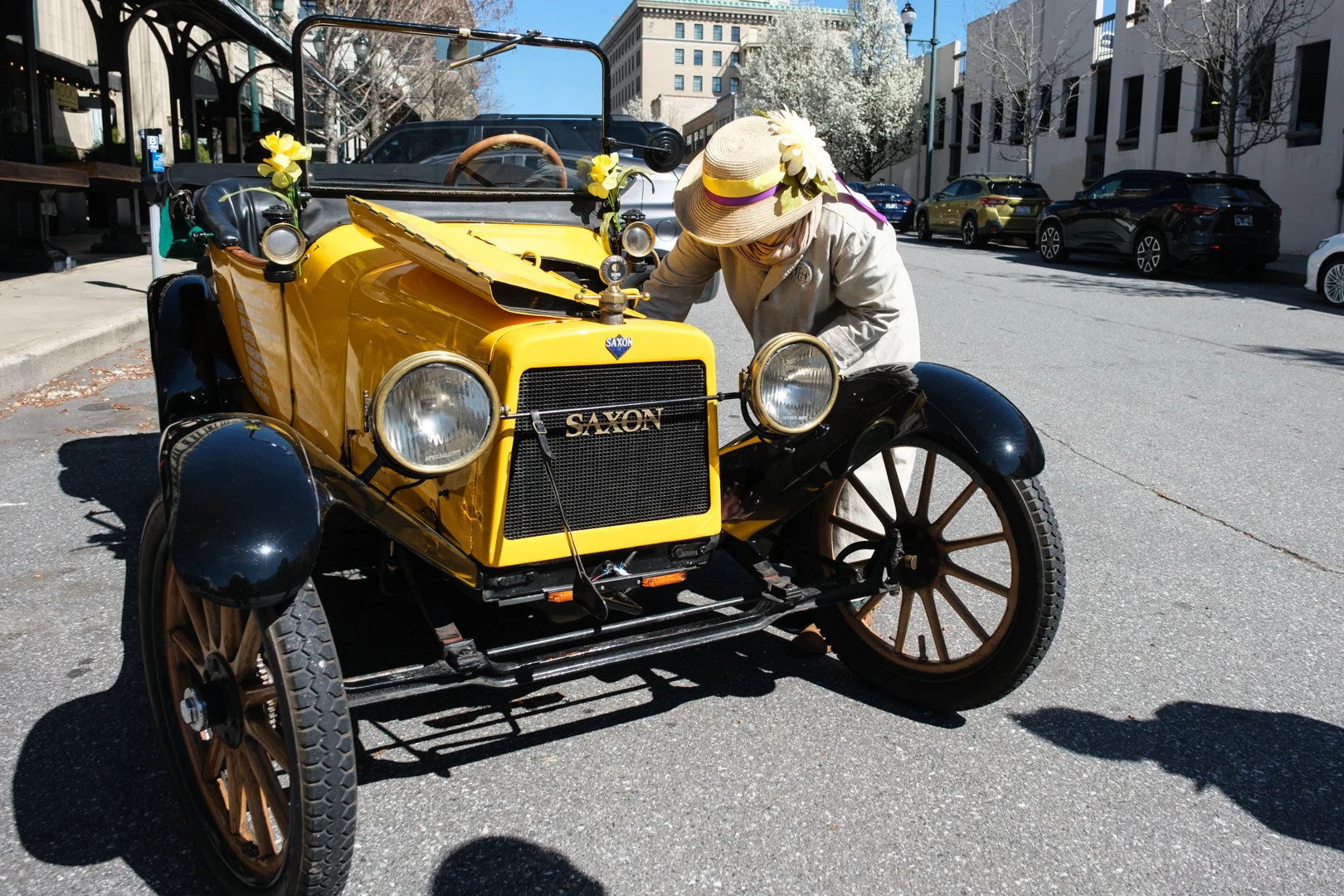
Checking the engine on the Saxon — not a Chalmers. The Vanderbilts had their grand touring cars. Alice and Nell had something better. Photo: Nina Zacuto
Then, in July 1916, the mountains reminded everyone who was actually in charge. Back-to-back hurricanes sent the French Broad River surging from 380 feet wide to 1,300 feet across, cresting at 21 feet. The Biltmore gates were destroyed. The rail lines were wiped out. Asheville was cut off from the world. The first Gilded Age ended in a muddy, violent roar.
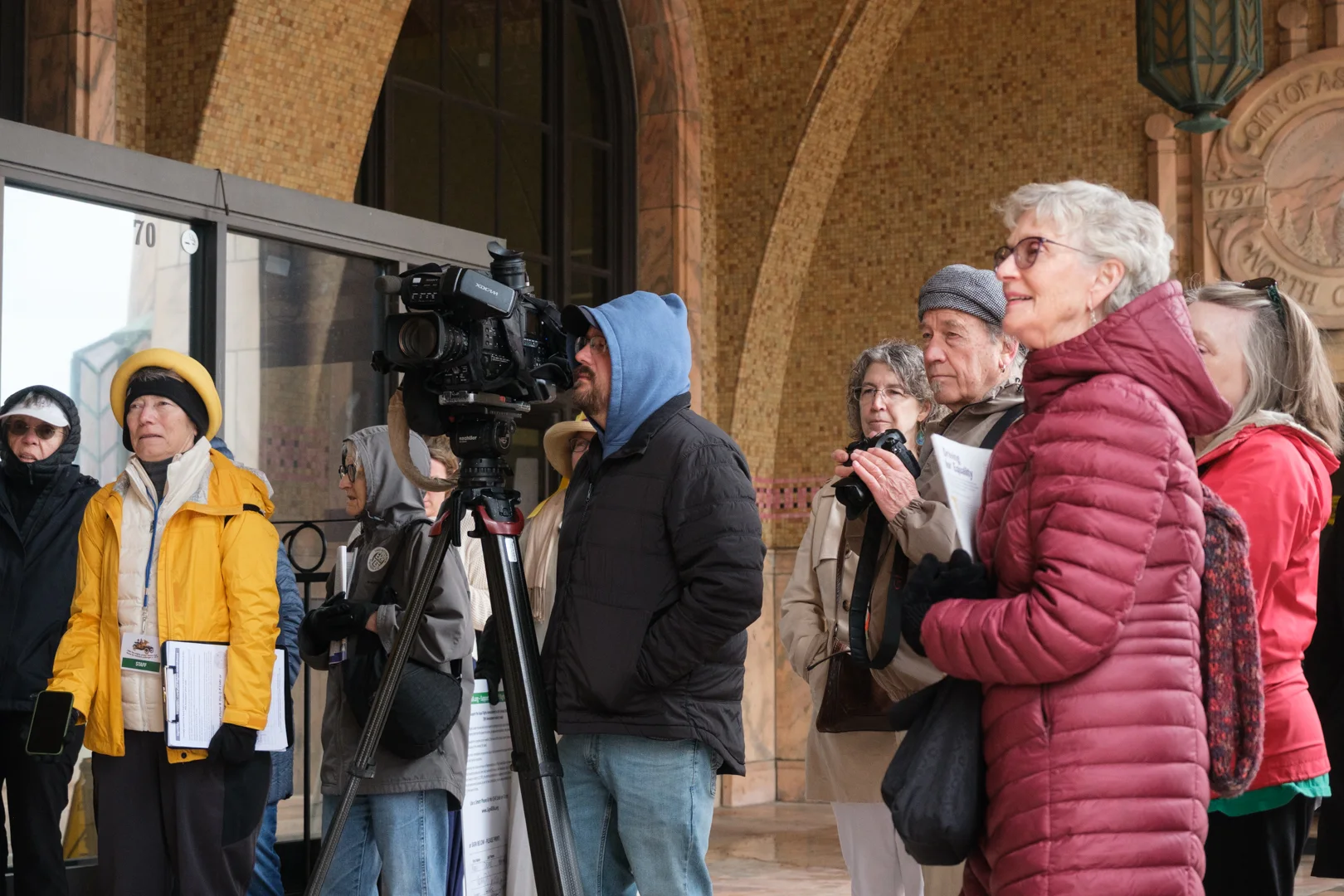
An Asheville crowd leans in as Mayor Esther Manheimer speaks — AAUW members, activists, and community leaders who didn't need convincing but came anyway, because showing up is what movements are made of. Photo: Nina Zacuto
Fast forward 110 years. In September 2024, Hurricane Helene brought the French Broad roaring back. The River Arts District — galleries, studios, gathering places — went under. The Golden Flyer II team drove past the river on the way into town and saw what remains: debris still being cleared from the banks, buildings along the water being rebuilt timber by timber, a city in the patient, determined work of putting itself back together. Under the steady leadership of Mayor Esther Manheimer — one of the most progressive voices in North Carolina municipal politics — Asheville is rebuilding not as a fortress for the few, but as an arts-saturated, equitably resilient community for everyone.
In 1916, the flood was a tragic interruption of an aristocratic dream. In 2026, the flood is a climate-driven call to action for a city that has learned, twice in a century, that to live in the beauty of the French Broad is to accept its power.
The mountain always wins. Except when it comes to the ERA and the Blue Ridge Mountains were surely cheering us on.
City Hall: The Mayor, the Seal, and the Movement
The morning event at Asheville City Hall — held in front of the city seal — drew a crowd that was, as the Driving the Vote Tour has come to appreciate, exactly the kind of crowd that gets things done. The AAUW women came out in force, filling the room with decades of organized advocacy energy. A television crew was there — another media hit for the campaign, another signal that the story of Alice and Nell and the Golden Flyer II is landing where it needs to land.
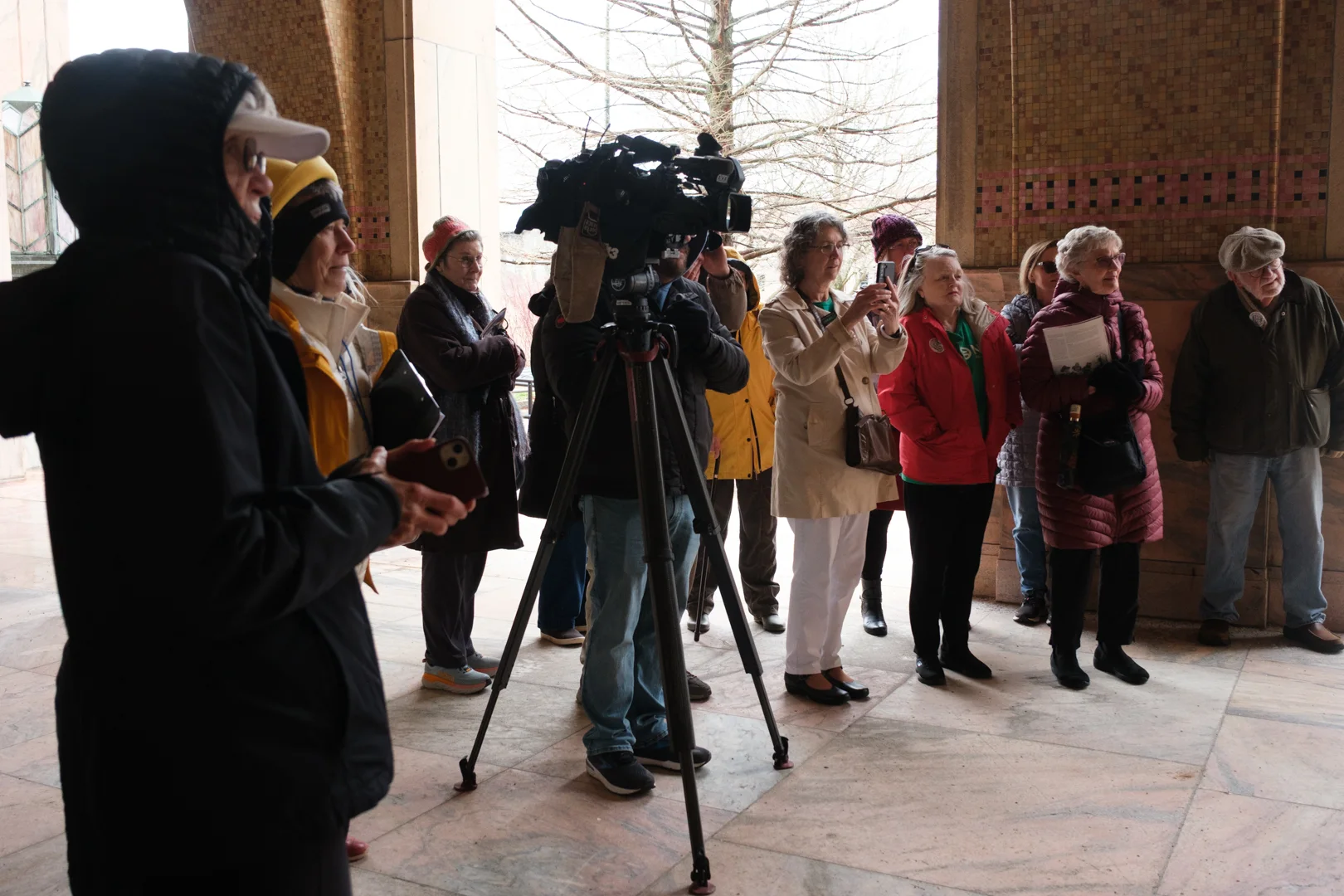
Camera crew and crowd gathered at Asheville City Hall as Mayor Esther Manheimer makes the case for the ERA — another television hit for the campaign, and another progressive mayor on record for constitutional equality. Photo: Nina Zacuto
Mayor Esther Manheimer brought the kind of political authority that comes from years of fighting for a city on the front lines of climate, equity, and economic recovery. She has led Asheville through flood and pandemic and the grinding work of rebuilding, and she brought that same forthrightness to the ERA. The ERA, she made clear, is not an abstraction in Asheville — it is part of the same progressive project as equitable recovery, climate resilience, and the belief that a community rises together or not at all.
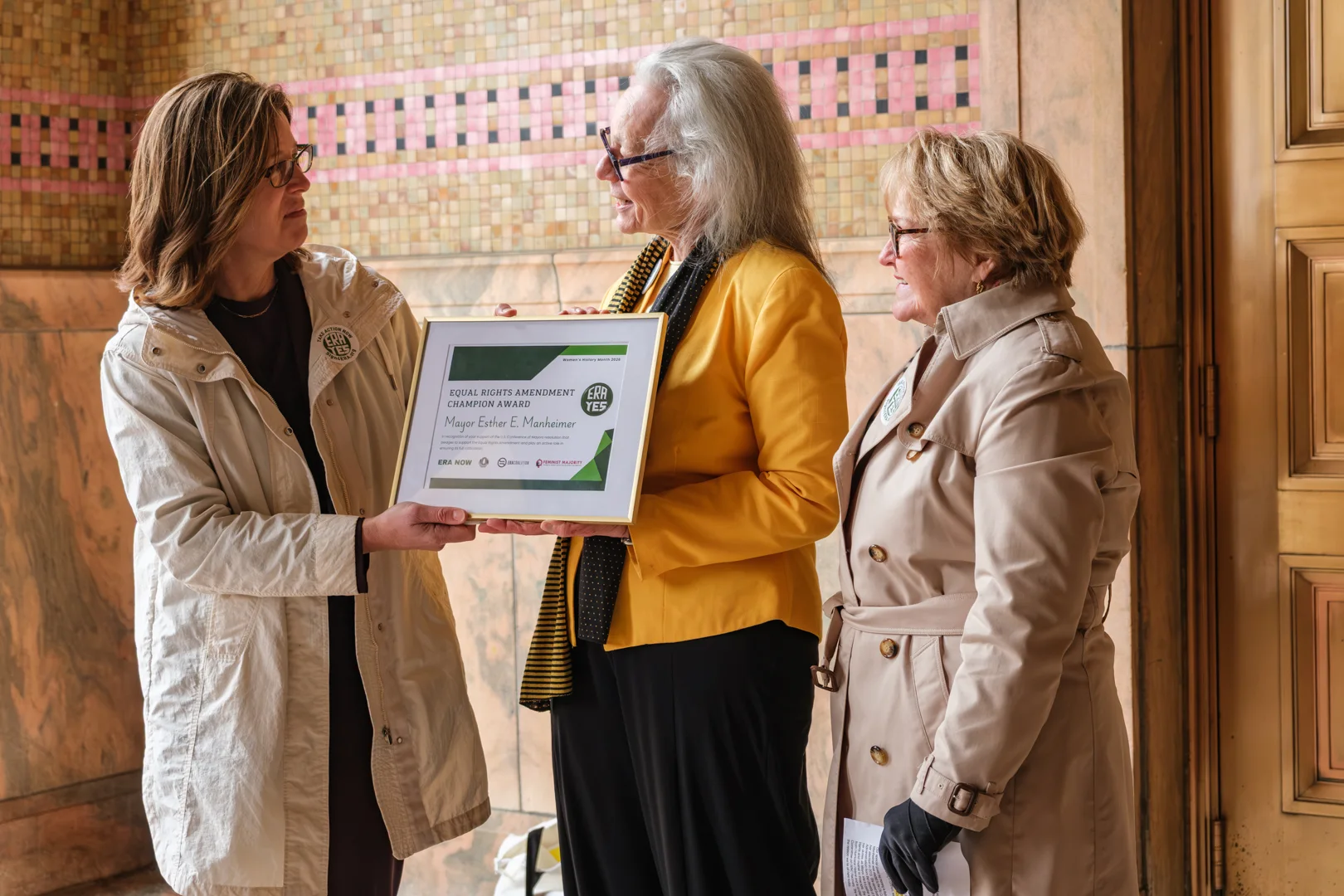
Mayor Esther Manheimer receives an ERA Champion Award presented by Kathy Bonk and Pat Ashe on behalf of Carolyn Maloney, ERA NOW, and the ERA-NC Alliance — Asheville's progressive leader officially joining the roster of champions calling on Congress to affirm the ERA as the 28th Amendment. Photo: Nina Zacuto
One particularly engaging attendee was a historian — a man in his late 30s or 40s who knew exactly where the original Saxon dealership in Asheville had been located, and who also handled Chalmers autos. He runs a Model T touring operation in the area and recognized immediately that he was standing next to one of the foremost Model T mechanics in the country — Peter Brown who had spent 5½ hours repairing the Golden Flyer II's clutch in a Falls Church garage just days earlier. The two of them talked engines and automotive history while the ERA work hummed along around them. As it should.
The Bookstore: Heart of a Rebuilding Community
If City Hall was the official moment of the day, the bookstore was its soul.
The Battery Park Book Exchange & Champagne Bar in Asheville is the kind of independent bookstore that the literary world spent a decade mourning as a dying species — and that is now, unmistakably, thriving. When the big box stores started shutting down and everyone assumed printed books were finished, these independent shops quietly became something else: community centers, gathering places, the living rooms that neighborhoods didn't know they needed.
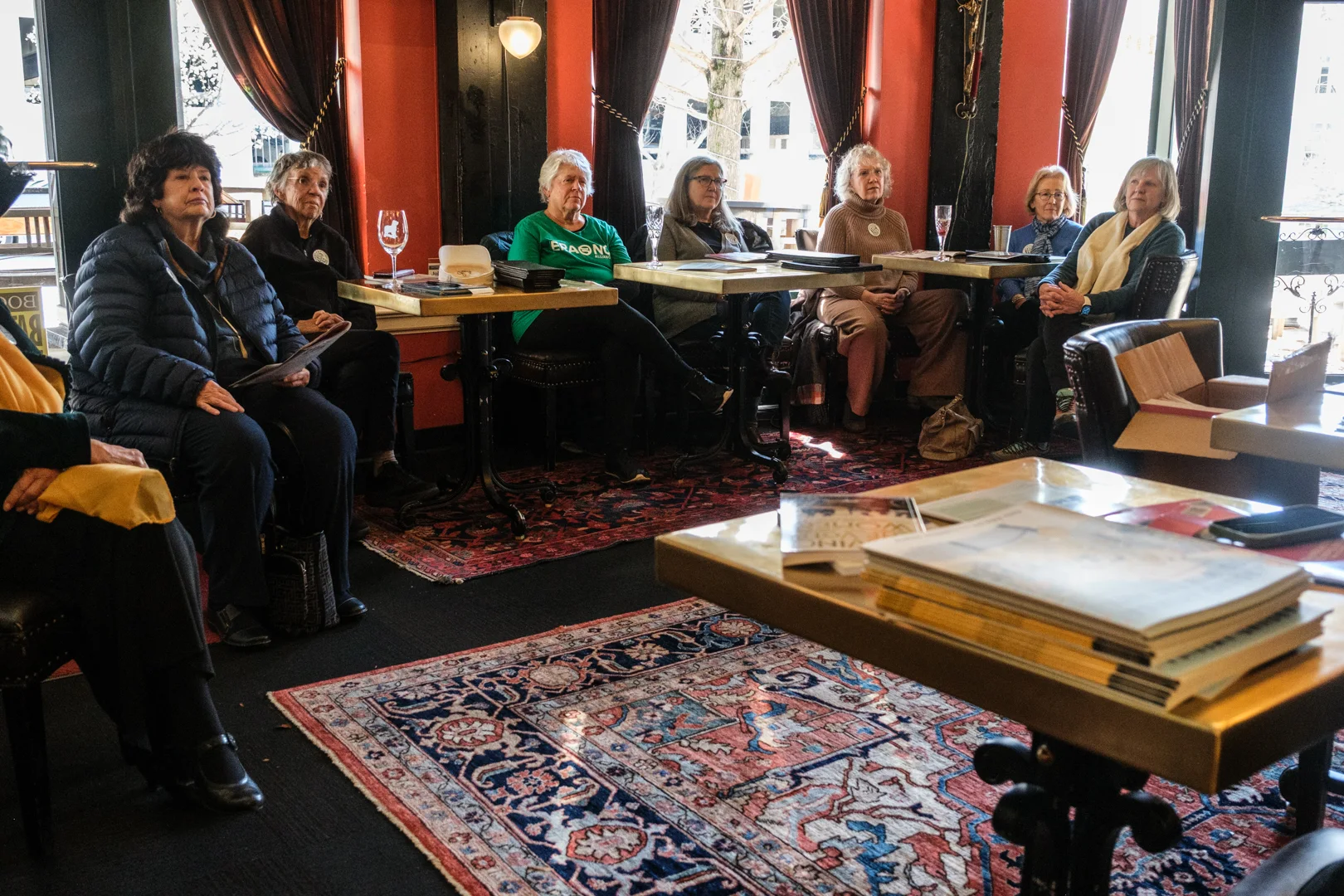
Gathering at the Battery Park Book Exchange & Champagne Bar — proof that independent bookstores are the living rooms of their communities, and that Asheville knows a great story when it hears one. Photo: Nina Zacuto
The owner of the Battery Park Book Exchange & Champagne Bar — Matt Clare, who owns the bookstore with his wife Erin Hallagan Clare — understood that instinctively. When a local AAUW member walked in a few weeks ago and described the Golden Flyer II tour, Matt didn't hesitate. Of course, he said. This is wonderful. Let's do it.
The ERA is central to the belief that a community rises together or not at all.
He laid out wine and champagne. He made space for the whole team. He took pride — visible, genuine pride — in his bookstore being exactly the kind of place where a constitutional amendment gets discussed over a glass of something good.
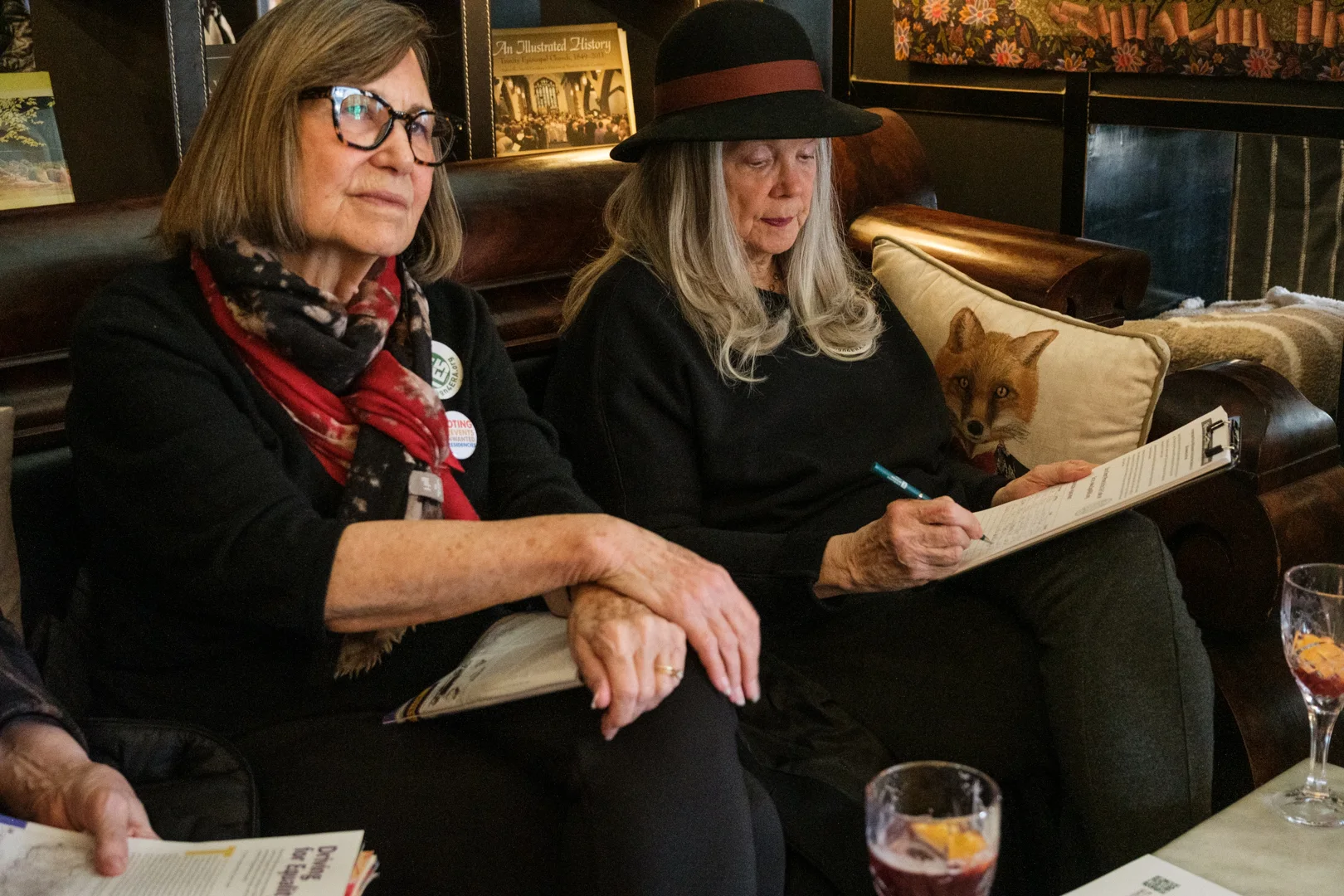
Petition signing at the Battery Park Book Exchange & Champagne Bar — because the best thing to do after a glass of champagne and a century of suffrage history is put your name on the ERA. Photo: Nina Zacuto
And then the “Saxon Ensemble” took the stage.
What has emerged on this tour, quietly and organically, is something that didn't exist at the start: a travelling company of storytellers. At the Battery Park Book Exchange, for the first time, the whole team spoke. Kathy Bonk opened with the tour itself — what it is, why it matters, where it's going. Mary Ann Gorman laid out the ERA's status and the stakes. Jeryl Schriever told the Alice and Nell story with the authority of someone who has lived inside it for years — and then told another story, quieter and more piercing: a little girl at the Seal Cove Auto Museum, where Jeryl serves as president of the board, who dragged her parents over to the exhibit of the 1916 Saxon and announced, with complete confidence: "I know that car — two women drove around the country in it. They had a cat and they couldn't vote." The children's book Around America to Win the Vote is doing its work. Little ones are teaching their parents about Alice and Nell.
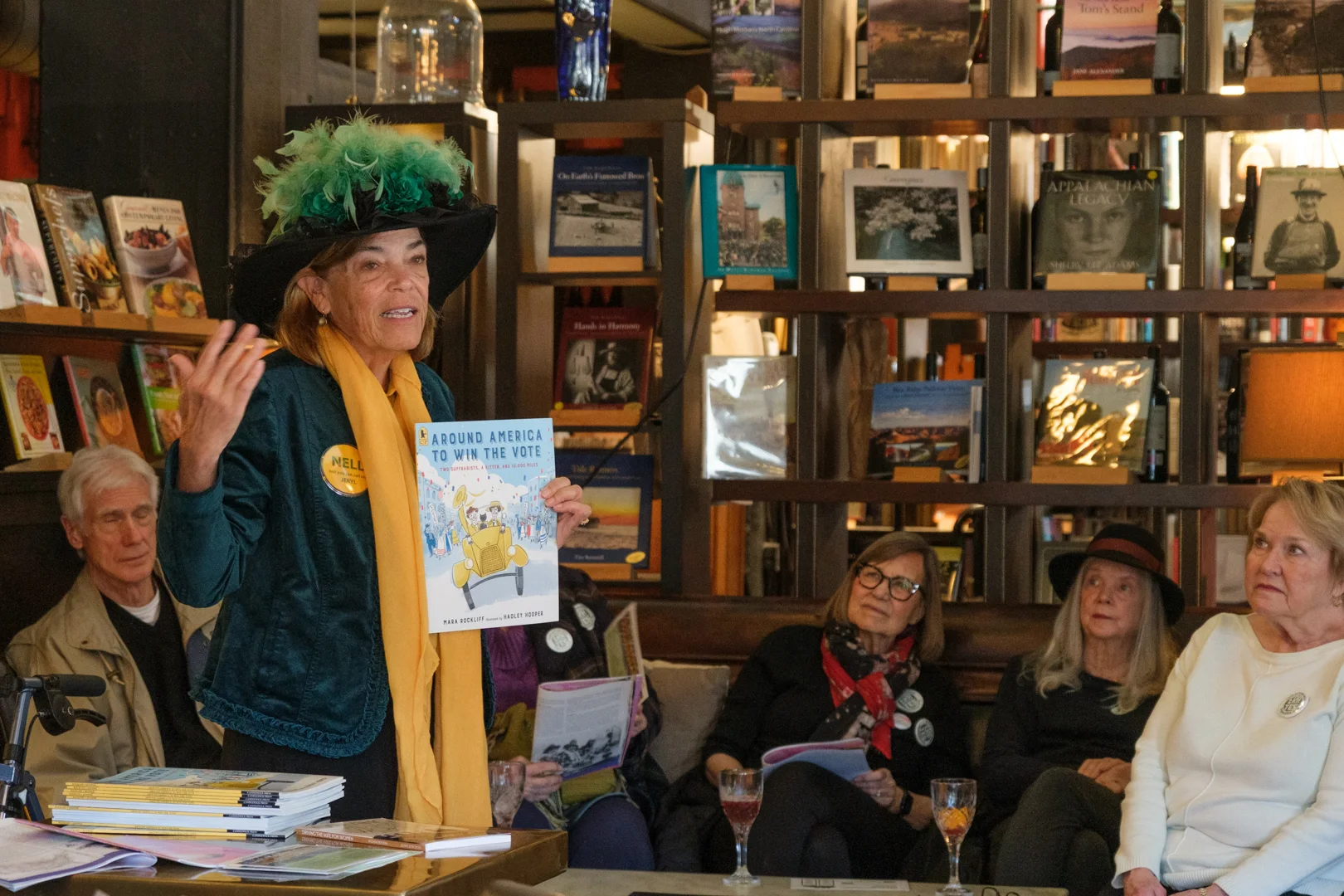
Jeryl Schriever holds up the children's book that started it all — recounting the moment a little girl at the Seal Cove Auto Museum dragged her parents to the 1916 Saxon exhibit and announced: "I know that car — two women drove around the country in it. They had a cat and they couldn't vote." Little ones are teaching their parents. The ERA is in good hands. Photo: Nina Zacuto
Susan Nourse talked about what it's actually like to drive the Saxon — the road feel, the wind, the sense of inhabiting a century-old machine on a mission. Peter talked about the engine, about Falls Church, about the mechanical miracle of keeping a 1914 roadster running across 25 states. Alex Huppé and Marc Tucker reported on the crowds and the energy they've witnessed at every stop. And Nina Zacuto — photographer for the tour and former NBC News producer — shared what she sees through her lens: a great story, and a country full of people who don't yet know that the ERA has not been affirmed by Congress, and who are ready to act the moment they find out.
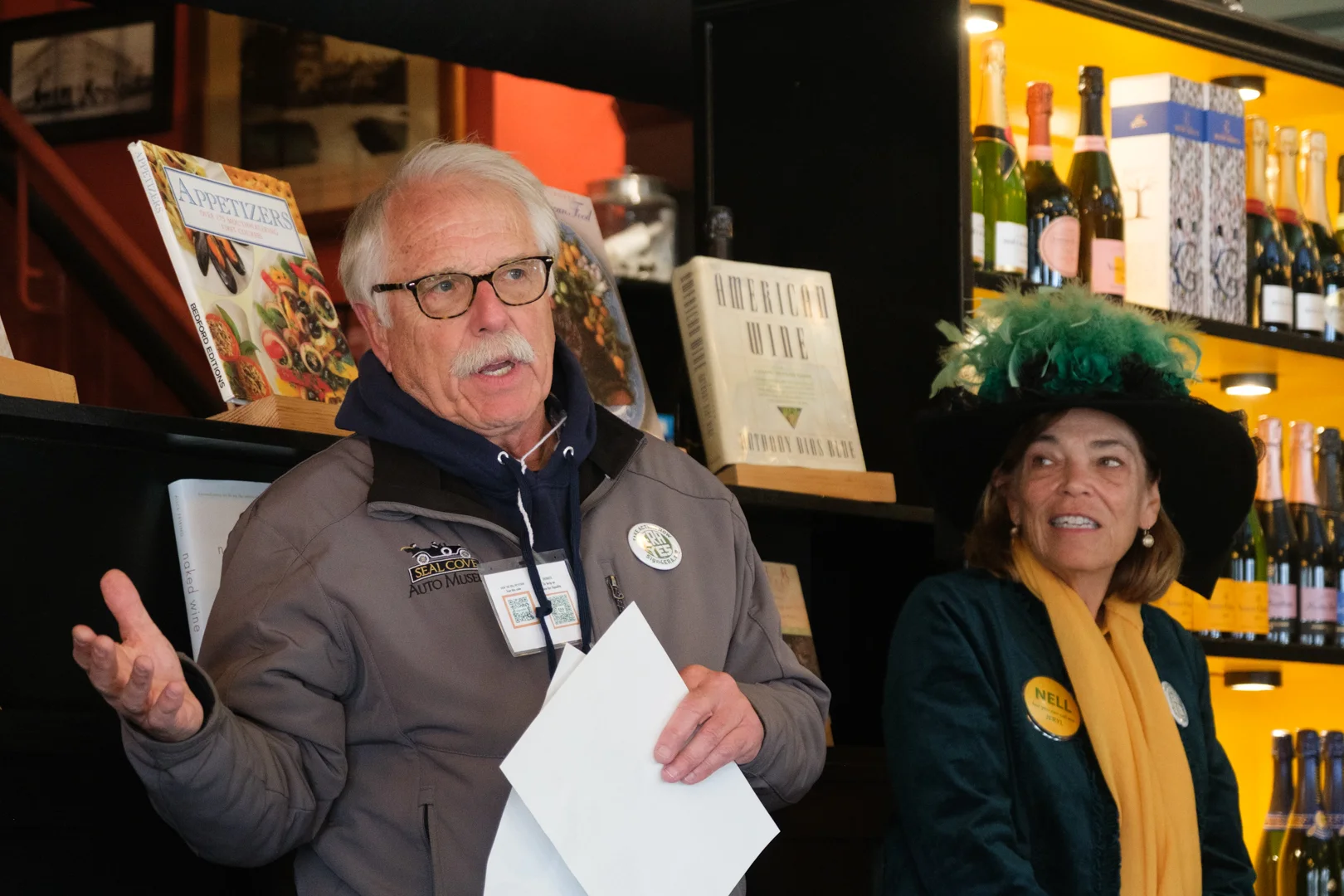
Peter Brown — the man who kept the Golden Flyer II running across 25 states — takes his turn at the Battery Park Book Exchange & Champagne Bar. From engine repair in a Falls Church garage to champagne and constitutional history in Asheville. The Saxon crew contains multitudes. Photo: Nina Zacuto
Mary Ann closed with the ask. Sign the petition. Better yet download some Petitions and get friends and neighbors to also sign for the ERA.
Standing room only. Not bad for a champagne bar on a Wednesday afternoon.
Audrey Muck, co-president of the ERA-NC Alliance, added the North Carolina context — the push for state ratification, the work with lawyers to clean up gendered language in NC statutes — before the crowd spilled out into the afternoon sunshine, many of them carrying petitions.
Matt Clare watched it all from behind his counter. He seemed pleased. He should be.
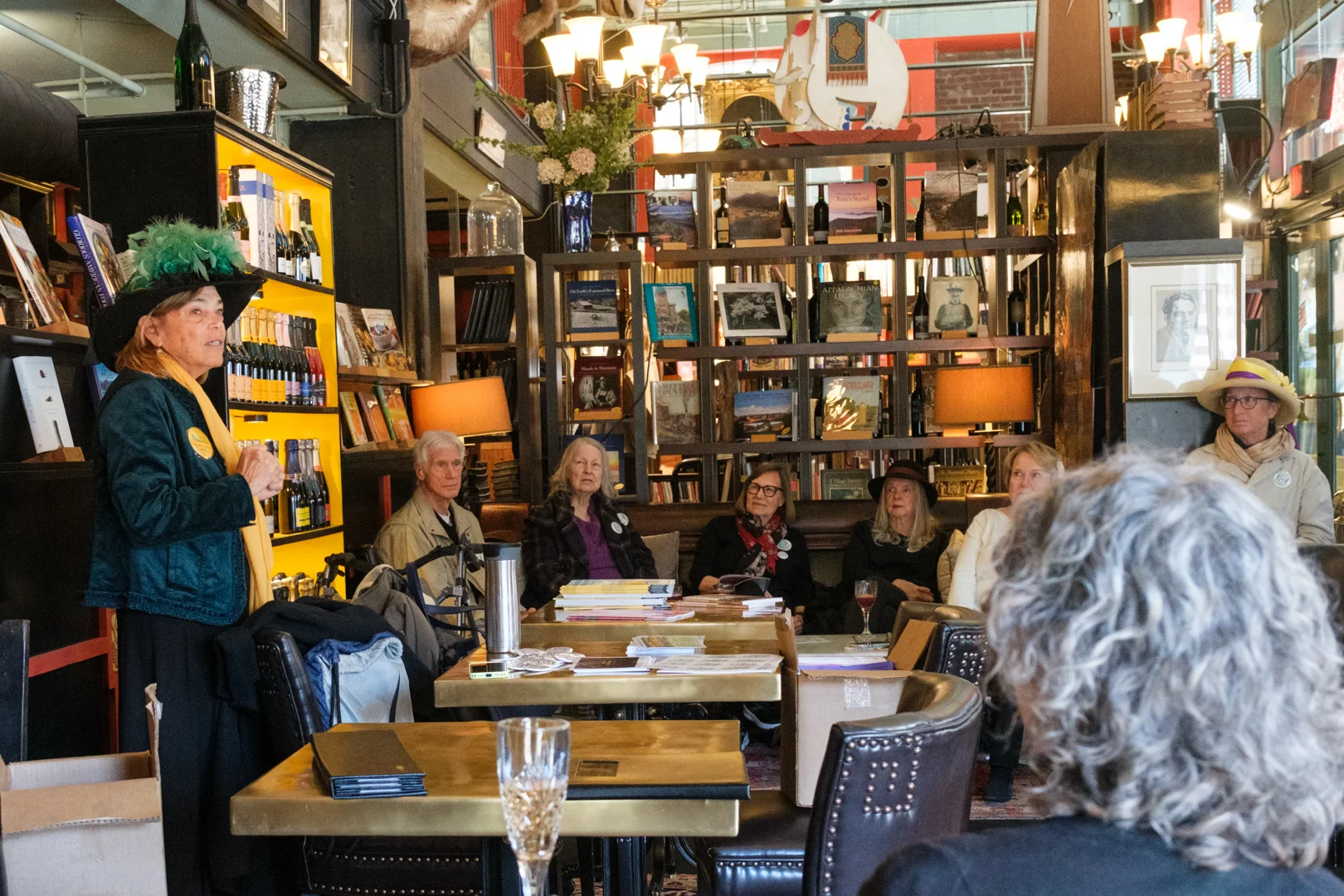
This is what Matt Clare, co-owner of the Battery Park Book Exchange & Champagne Bar, accommodated — an engaged group, leaning in, ready to act. He said yes to hosting the event without hesitation. Now he knows why. Photo: Nina Zacuto
The Golden Flyer II left Asheville heading south, past the river, past the construction crews, past the evidence of what water can do when it decides to remind a city of its power.
The mountains watched it go. We like to think they approved.
Follow the Journey
Watch history happen. The Golden Flyer II is rolling — New York to the Pacific and back. Track every stop as we drive the ERA fight across 25 states. Real stops. Real people. Real pressure.

